


Fiji’s public service is building capacity to plan, manage and deliver high quality development projects through the Australia Awards Fiji Short Course in Project Management. This course supports good governance, institutional strengthening and long-term development outcomes.
Twenty Fijian civil servants, including 11 women, were selected for the short course representing 13 government ministries and a broad range of professional roles. All participants are already involved in projects in their everyday work, making the training practical and relevant.
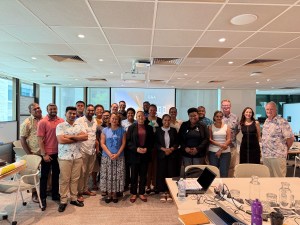
A key part of the Project Management Short Course was the one-week pre-course workshop held in Suva in December 2025. The workshop helped participants learn basic project management skills and prepare for the intensive two-week training in Australia.
DFAT Development Counsellor, Andrew Shepherd, opened the pre-course workshop and congratulated the participants on their selection. He thanked them for their commitment to improving Fiji’s civil service and their respective government departments.
“Effective project management supports accountability, transparency and better service delivery. These skills are essential to achieving Fiji’s development priorities and long-term national outcomes,” Mr Shepherd said.
Delivered in collaboration with the University of Queensland, the course aligns with Australia Awards’ broader development objectives of strengthening institutions, building human resource capacity and promoting good governance.
During the course, participants will learn practical tools to help them plan projects, manage risks, report clearly, and lead with confidence.
Practical and hands on learning
The pre‑course workshop focused on practical learning with a strong foundation in core project management principles, tools and terminology. Participants worked on real projects from their ministries and learned how structured project management can improve planning, teamwork, risk management, and project delivery. This helped build confidence and ensured participants were ready for the Australia‑based training.
The workshop also helped participants understand the academic and professional expectations of the course, making the transition to study in Australia smoother.
Strengthening local capability
The course places strong emphasis on sustainability and local ownership with the added participation of two trainers from the Fiji Learning Institute for Public Service (FLIPS) alongside the group of civil servants.
Mr Shepherd noted that the FLIPS trainers will be mentored throughout the program to become accredited co-facilitators, working closely with the University of Queensland course trainers in the design and delivery of activities and sessions.
“A complete training package will be handed over to FLIPS and uploaded to its Learning Management System,” he said. “This will enable the course to be delivered locally in the future, supporting continuity and long-term impact within Fiji’s public service.”
Shared responsibility for better results
Acting Permanent Secretary for Civil Service and Acting Chief Executive Officer of FLIPS, Mr Pita Tagicakirewa, encouraged participants to use the training to improve performance and accountability in their ministries.
He reminded participants that the program is not only for personal development, but also a responsibility to the people they serve. He highlighted the importance of sharing knowledge and working across agencies to improve public sector performance.
“Each of you will return with knowledge that can influence systems, guide decisions and strengthen accountability,” Mr Tagicakirewa said. “You will also be part of a growing network—across agencies and with development partners, focused on improving public sector performance through effective project management.”
Learning that makes a difference
For Senior Technical Officer, Ravuiwai Toganivalu of the Ministry of Housing, the training is especially useful. Her work supporting informal settlement upgrade programmes requires close engagement with communities, landowners and multiple stakeholders.
She said the pre‑course workshop helped her better plan budgets, manage risks, and engage stakeholders earlier. She also valued the focus on inclusive approaches when working with communities.
Participants have now completed the final two weeks of training in Australia at the University of Queensland. The program featured site visits to Australian organisations and government agencies, giving participants hands‑on insight into how effective project management is applied in real‑world settings.
By combining local preparation with international learning, the Australia Awards Fiji Short Course in Project Management is strengthening the skills of Fiji’s public servants and supporting national development priorities through the Fiji–Australia Vuvale Partnership.





0 Comments
Leave a comment