

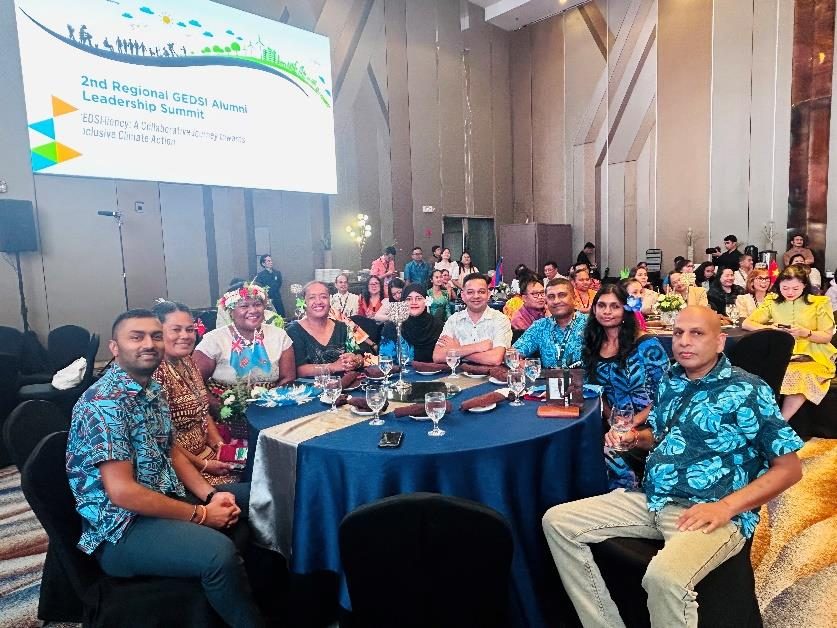
In September 2024, eight Australia Awards Fiji alumni travelled to the 2nd Regional Gender Equality, Disability, and Social Inclusion (GEDSI) Leadership Summit in the Philippines. The summit brought together 150 alumni delegates from 10 countries, fostering regional collaboration on inclusive disaster resilience, climate action, and social equity.
Hosted by the Australia Awards and Alumni Engagement Program – Philippines, the regional GEDSI summit provided a platform for Pacific and ASEAN leaders to share knowledge and strengthen partnerships. During the summit’s opening, Johanna Stratton, Counsellor at the Australian Embassy in the Philippines, met with the Fiji delegation, reaffirming Australia’s commitment to supporting inclusive leadership in the Pacific. Alumni also had the opportunity to attend a networking dinner hosted by the Philippines program and connect with international development professionals. These interactions underscored the importance of sustained engagement between Asia-Pacific regional leaders in advancing inclusive policies and practices.
Showcasing Fijian Leadership in Inclusion
Among the Fiji delegates, Dr Sunil Kumar, an Australia Awards alumnus and Assistant Professor in Inclusive and Special Education at Fiji National University, delivered a presentation on Disability Inclusion in Disaster Preparedness and Response. His session highlighted the disproportionate risks faced by persons with disabilities (PWDs) during disasters and the need for inclusive emergency planning. He emphasised that traditional disaster response strategies often fail to account for accessibility challenges, leading to increased mortality and displacement among PWDs.
Dr Kumar’s presentation drew on global research and Pacific case studies, advocating for greater collaboration between government agencies, NGOs, and disabled persons’ organisations. He called for disability-inclusive frameworks that ensure equitable access to emergency services, shelter, and psychosocial support in times of crisis.
Another Fiji alumnus, Vasenai Kereni, Associate Dean for TVET at Fiji National University presented on Women Leadership in Disaster Risk Reduction.
A Transformative Learning Experience
Over the two-day summit, the Fiji alumni participated in a range of sessions that explored best practices in GEDSI implementation. They engaged in a panel forum on Inclusive Disaster Risk Reduction and Resilience, attended a site visit to the Garden of Hope to learn about gender-inclusive sustainability projects, and took part in knowledge-sharing sessions on disability inclusion and women’s leadership in conservation.
The Fiji delegation reflected on key lessons from the summit, noting the importance of intentional inclusion in program design and the need to go beyond symbolic representation. They emphasised that merely working with women does not automatically achieve GEDSI objectives and that sustainable development initiatives must be community-led and responsive to local realities. The Garden of Hope excursion reinforced the idea that investing in women’s leadership strengthens entire communities, as participants heard from local women who were encouraged to envision their future before receiving agricultural training.
A particularly striking takeaway from the summit was the use of “photovoice”, a visual storytelling method used to articulate challenges and priorities of marginalised individuals. This approach was presented as a tool to inform policy decisions and advocate for more inclusive development strategies.
For the Fiji alumni, the summit was more than a professional gathering—it was an opportunity to bring home actionable strategies to strengthen GEDSI integration in Fiji. Their participation will contribute to ongoing efforts to embed inclusive policies in education, disaster preparedness, and climate action, while also strengthening regional ties between Pacific and ASEAN leaders.
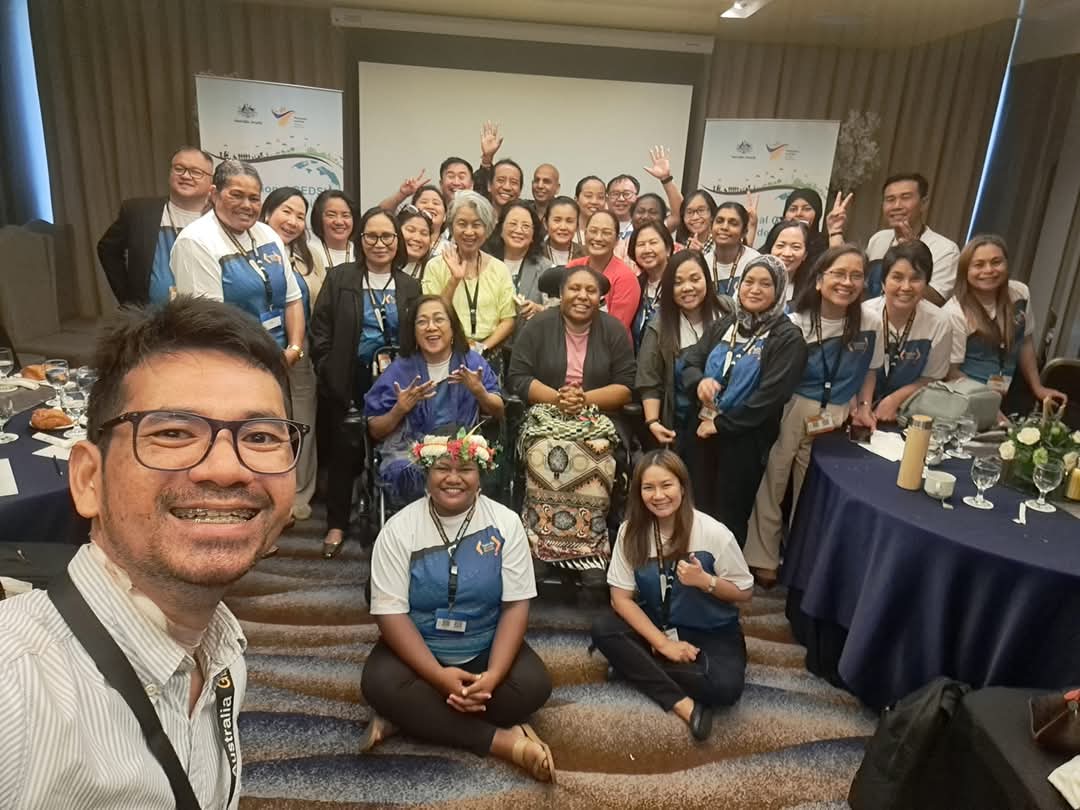
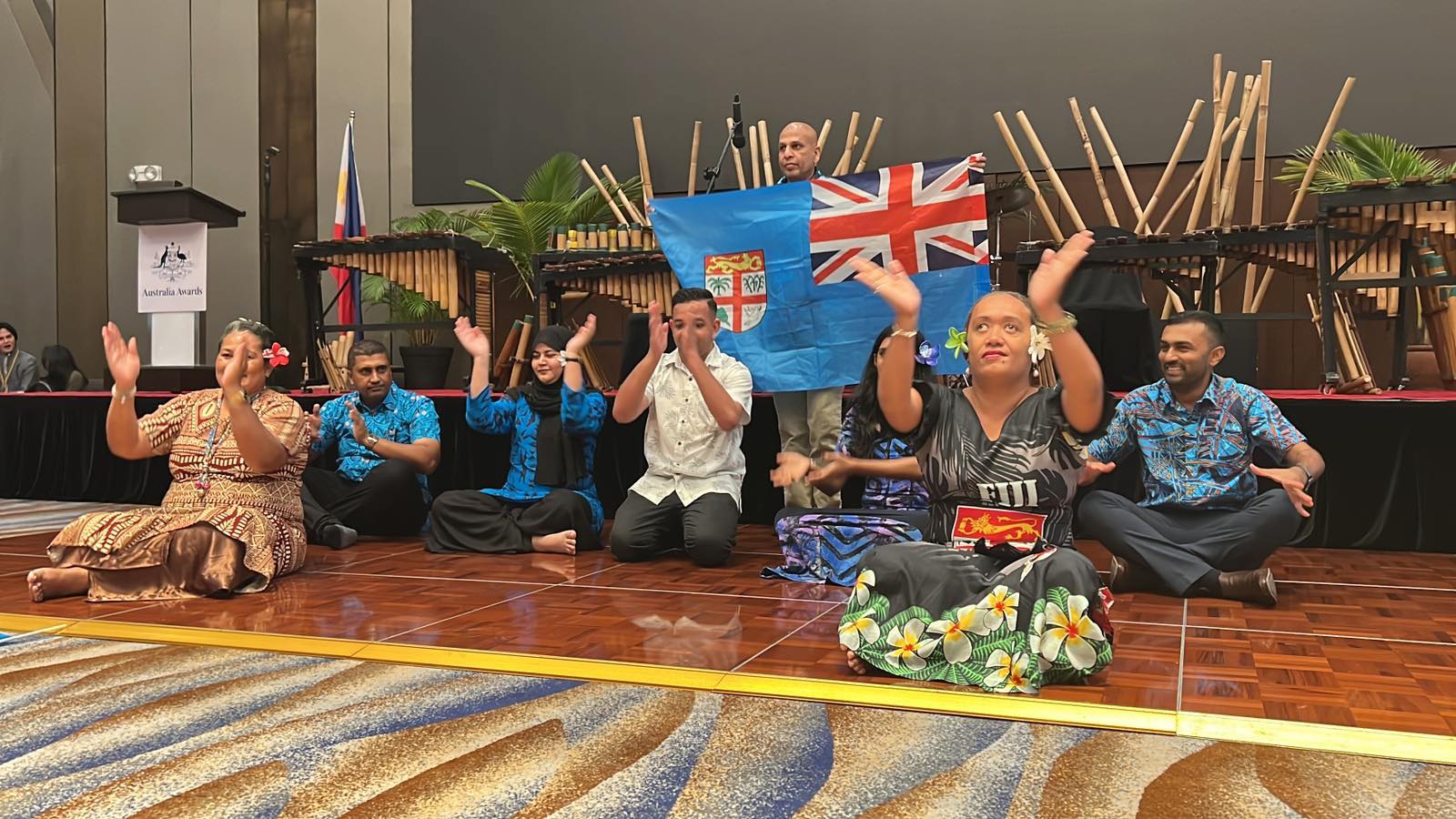
The event reinforced the role of Fijian Australia Awards alumni as key drivers of change, equipping them with new insights and networks to influence inclusive policy-making in the region and ensure that GEDSI principles are embedded in national and regional development strategies. As discussions on inclusive climate action and disaster resilience continue, experiences like these will serve as a catalyst for long-term, meaningful change in Fiji and the Pacific.
0 Comments
Leave a comment